





Accredited by:
Luiggi Caldas • July 20, 2026
Things to Do in Miami: 40 Experiences Locals and Visitors Actually Recommend
Miami is not one city. It's a collection of neighborhoods, each with its own personality, from the Art Deco architecture of South Beach to the Cuban coffee culture of Little Havana, from the street art of Wynwood to the mangroves of the Everglades. What makes it unlike any other city in the United States is the combination: tropical climate, multicultural population, world-class dining, accessible nature, and an energy that's hard to describe until you feel it.
Whether you're an international student spending a semester here, a tourist visiting for a week, or a local looking for something new, this guide covers 40 experiences organized by what you're actually in the mood for. It is not just a numbered list, but a real guide to help you decide how to spend your time.
Spending more time in Miami? If improving your English is part of your plans, Lingua offers Intensive and Semi-Intensive English programs at its Miami-Doral campus.
See English programs in Miami-Doral →
Beaches and Water
Miami's coastline is its most famous feature. But not all beaches are the same. Each one attracts a different crowd and offers a different experience.
South Beach
The stretch of sand between 5th Street and 15th Street is probably the most photographed beach in the United States. White sand, turquoise water, colorful lifeguard towers, and the Art Deco buildings of Ocean Drive as a backdrop. It's busy, it's lively, and it's unmistakably Miami. The boardwalk that runs along the beach is perfect for walking, jogging, or cycling. South Beach is free to access. You only pay if you rent a chair or umbrella.
Crandon Park Beach (Key Biscayne)
Consistently rated one of the best beaches in the country. Crandon Park is on Key Biscayne, a barrier island accessible via the Rickenbacker Causeway from downtown Miami. The water is calm and shallow, making it ideal for families. There's ample shade from palm trees, picnic areas, and a nature center. Parking is $8 per vehicle on weekdays, $10 on weekends and holidays.
Bill Baggs Cape Florida State Park (Key Biscayne)
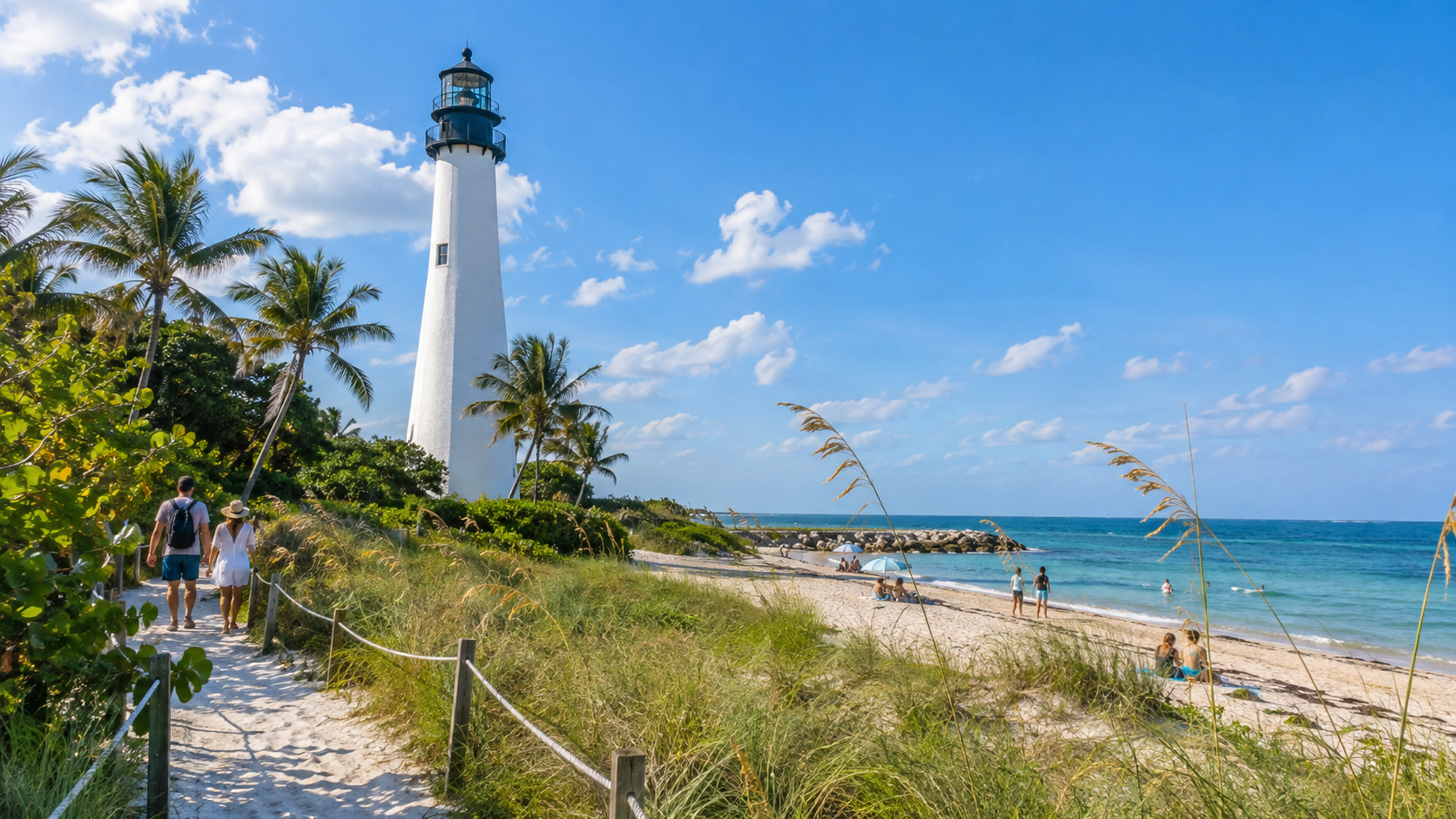
At the southern tip of Key Biscayne, this state park is home to the Cape Florida Lighthouse, the oldest standing structure in Miami-Dade County, built in 1825. The beach is less crowded than South Beach, the water is clear, and you can rent kayaks and paddleboards. The park also has two casual beachside restaurants. Admission is $8 per vehicle.
Haulover Beach Park
North of Bal Harbour, Haulover is a wide, clean beach with less of a tourist crowd than South Beach. It's popular with kite surfers due to consistent wind conditions. The northern end is a designated clothing-optional beach, one of the few in the United States.
Venetian Pool (Coral Gables)
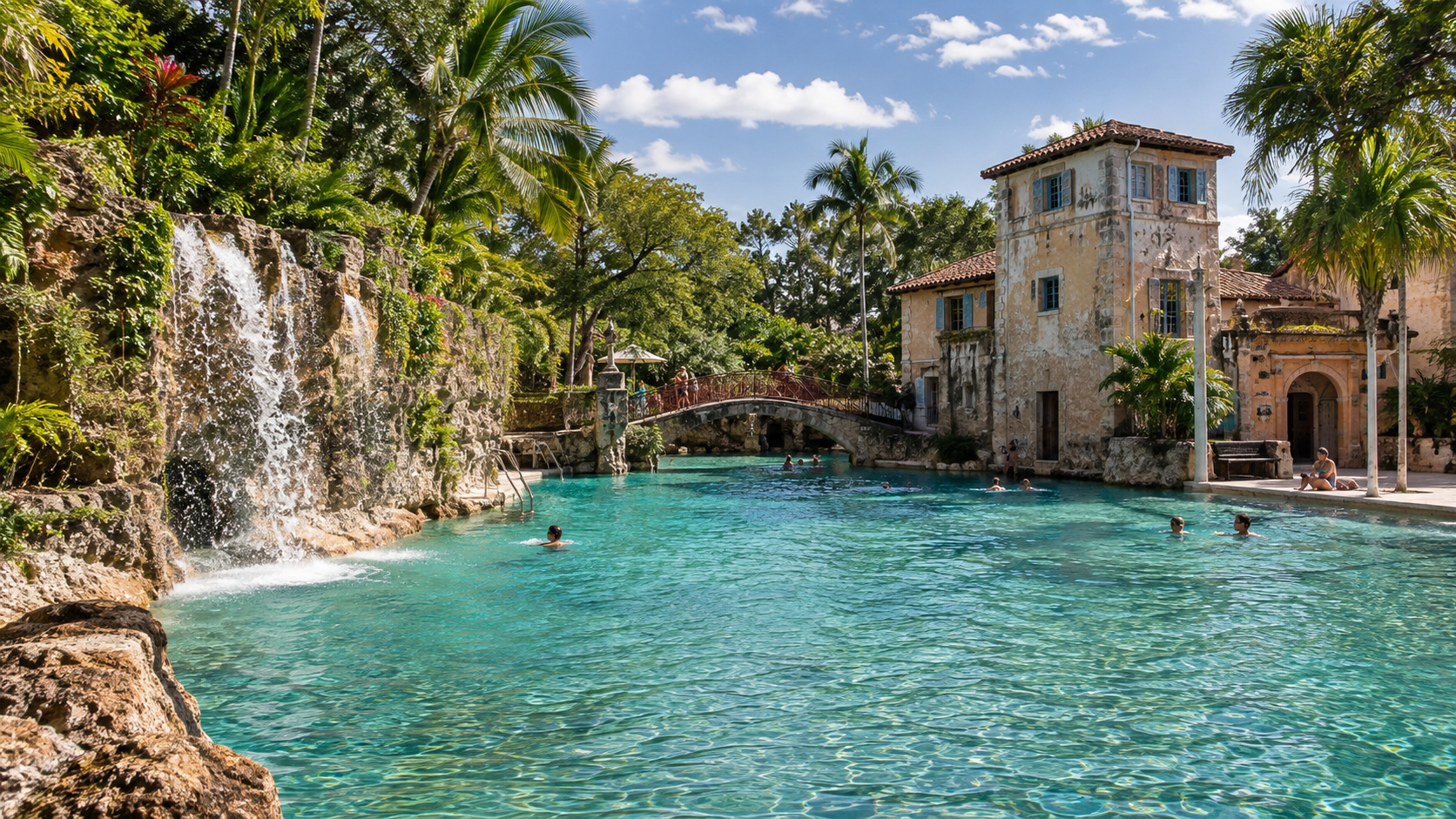
Not technically a beach, but one of the most unique swimming experiences in Florida. The Venetian Pool is a public swimming pool built in 1924 from a coral rock quarry, designed in a Mediterranean style with waterfalls, caves, and stone bridges. It's filled with spring water and drained and refilled daily. Admission is approximately $16 to $20 for adults, with reduced rates for Coral Gables residents. The pool is seasonal and is typically closed from December through February for maintenance.
Art and Culture
Miami has one of the most active art scenes in the United States, anchored by world-class museums, a thriving gallery district, and street art that has become a global destination.
Wynwood Walls
An outdoor museum of large-scale street art in the Wynwood neighborhood. Over 35 murals by international artists cover the walls of a former warehouse district. The Walls themselves are free to view from the outside, but there is a ticketed area for the indoor gallery and closer access to some installations. The surrounding blocks of Wynwood are filled with additional murals, galleries, breweries, and restaurants, all within walking distance.
Pérez Art Museum Miami (PAMM)
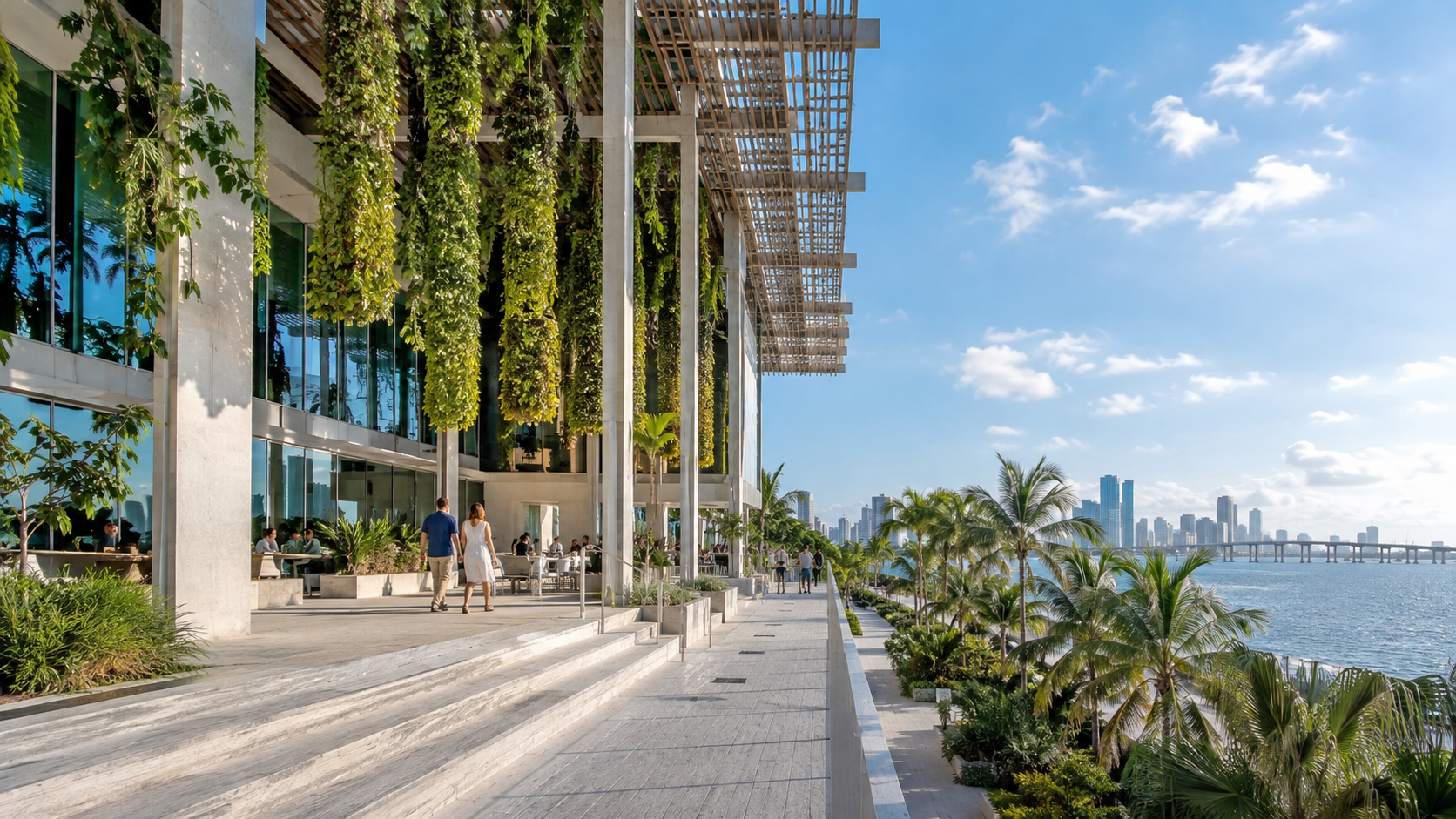
Located on the waterfront in Museum Park, PAMM houses a collection of 20th and 21st-century international art, with a focus on art from the Americas, the Caribbean, and the African diaspora. The building itself, designed by architects Herzog and de Meuron, is an attraction, with a hanging garden of tropical plants along its exterior. General admission is $16 for adults. Admission is free on the second Saturday of every month.
Institute of Contemporary Art Miami (ICA Miami)
In the heart of the Design District, ICA Miami is a museum dedicated to contemporary art. It's always free, with no ticket required. The museum hosts rotating exhibitions, a sculpture garden, and public programs. It's smaller than PAMM but consistently hosts some of the most exciting contemporary work in the city.
Vizcaya Museum and Gardens
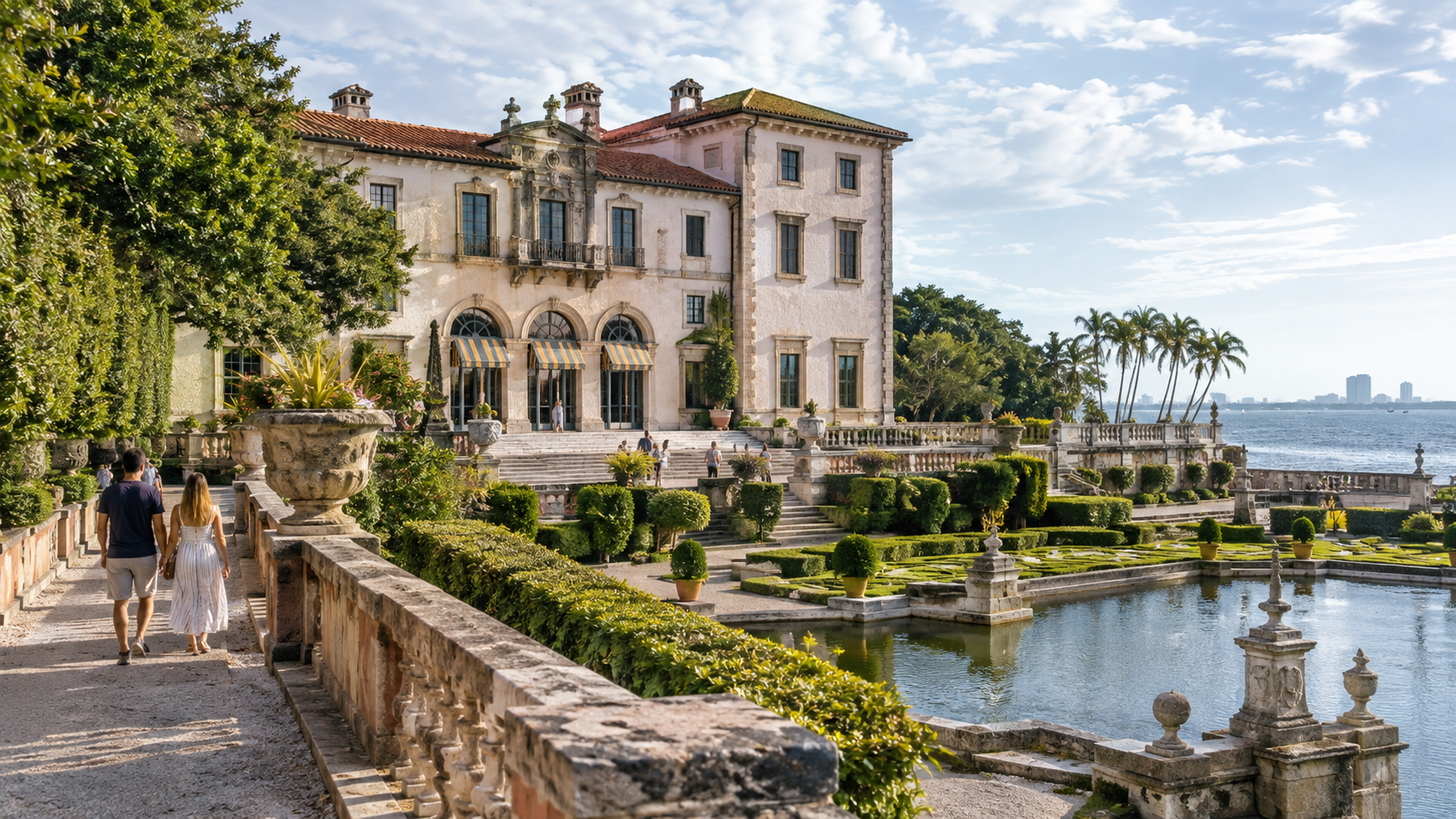
Miami's number one attraction on TripAdvisor. Vizcaya is an Italian Renaissance-style villa built in 1916 as a winter residence for industrialist James Deering. The house contains original furnishings, artwork, and decorative objects. The gardens, which consist of 10 acres of formal European-style landscaping overlooking Biscayne Bay, are spectacular. Located in the Coconut Grove neighborhood. Adult admission is approximately $25.
Frost Museum of Science
Also in Museum Park, next to PAMM, the Frost Museum is a three-level science museum with a planetarium, a living aquarium with a shark tank you can view from below, and interactive exhibits on the Everglades, space, and physics. It's particularly good for families and children. Adult admission is approximately $30, which includes the planetarium show.
Superblue Miami
An immersive art space in the Allapattah neighborhood featuring large-scale installations by artists like teamLab, Es Devlin, and James Turrell. You walk through rooms of light, color, sound, and digital environments that respond to your movement. It's unlike any traditional museum. Tickets are approximately $36 for adults.
Miami Design District
A neighborhood of luxury boutiques, design showrooms, and art installations, all within a walkable outdoor area. Even if you're not shopping, the architecture and public art are worth the visit. Notable permanent installations include Buckminster Fuller's Fly's Eye Dome. Dining options range from casual to high-end.
Neighborhoods and Culture
Miami's neighborhoods are its real attraction. Each one has a distinct cultural identity shaped by the communities that built it.
Little Havana
The cultural heart of Miami's Cuban community, centered on Calle Ocho (SW 8th Street). Walk through Domino Park (Máximo Gómez Park), where elderly men play dominoes under the shade. Stop for a cafecito (Cuban espresso) at a ventanita (walk-up window). It costs about $1. Try a Cuban sandwich or a guava pastry. Visit the small cigar factories where cigars are still hand-rolled. Listen to live salsa music spilling out of restaurants. Little Havana is not a tourist attraction built for visitors. It's a living neighborhood. That's what makes it special.
Coconut Grove
One of Miami's oldest neighborhoods, with a bohemian, village-like atmosphere. Shaded streets with banyan trees, independent boutiques, outdoor cafés, and CocoWalk, a recently renovated open-air shopping and dining center. Coconut Grove is also home to Vizcaya, the Barnacle Historic State Park, which is the oldest house in Miami-Dade County still on its original site, and the waterfront Regatta Park.
Brickell
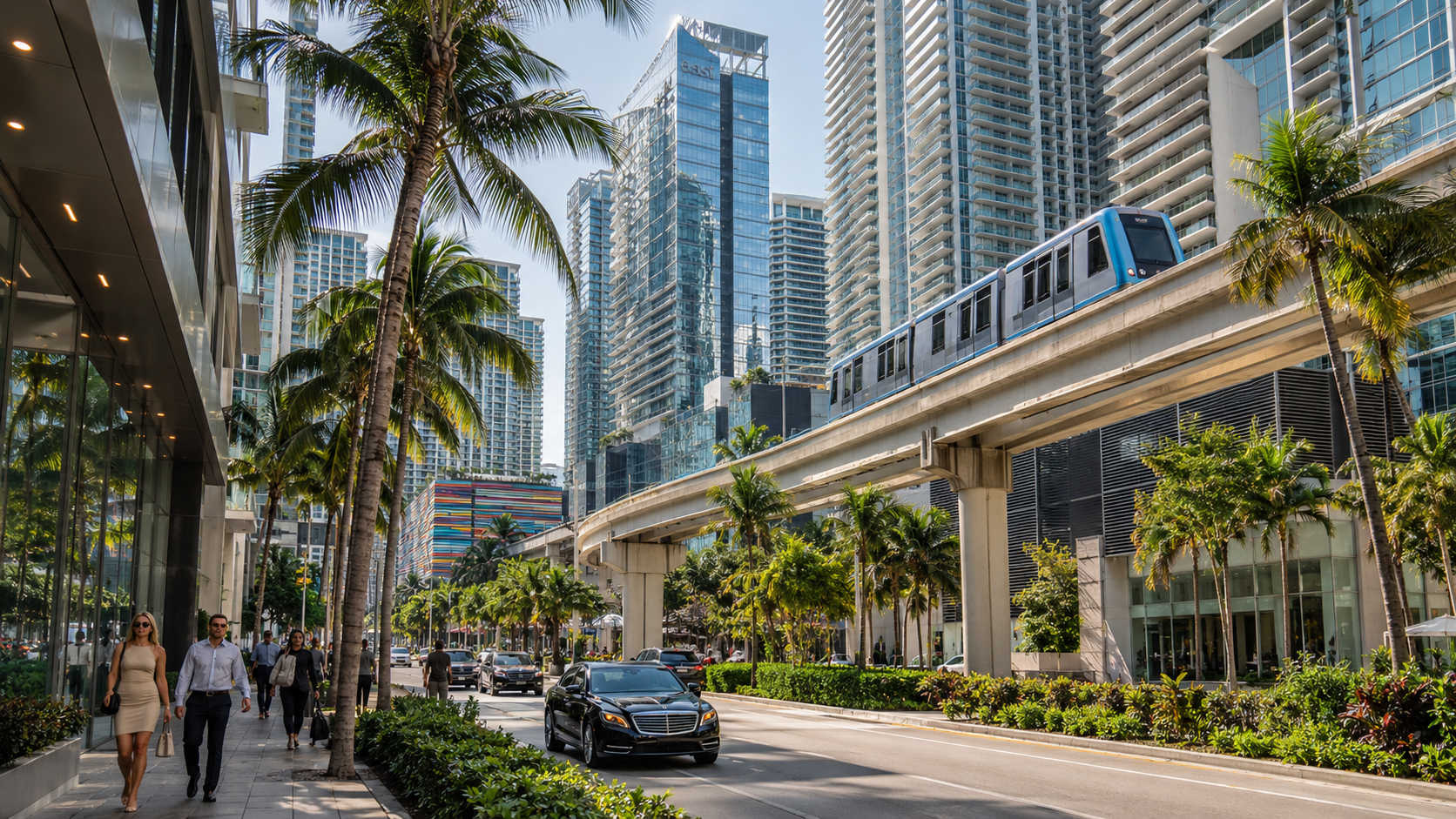
Miami's financial district, filled with glass towers, international banks, and upscale restaurants. Brickell City Centre is a modern shopping and dining complex with a climate ribbon, an elevated architectural canopy that channels breezes and provides shade. The area is walkable and well-connected by the free Metromover, an elevated automated train.
Midtown and the Design District
A mix of residential, retail, and cultural spaces north of downtown. The Design District is upscale and architecturally striking. Midtown is more casual, with breweries, food halls, and local shops.
Overtown
Historically the center of Miami's African American community, Overtown is home to the Lyric Theater, the oldest Black theater in South Florida, built in 1913, and a growing food scene anchored by Red Rooster Overtown, by chef Marcus Samuelsson. The neighborhood has deep cultural significance and is undergoing revitalization.
Nature and Outdoors
Miami sits between the Atlantic Ocean and the Everglades, one of the most unique natural environments on Earth. You don't have to leave the metropolitan area to experience genuine wilderness.
Everglades National Park
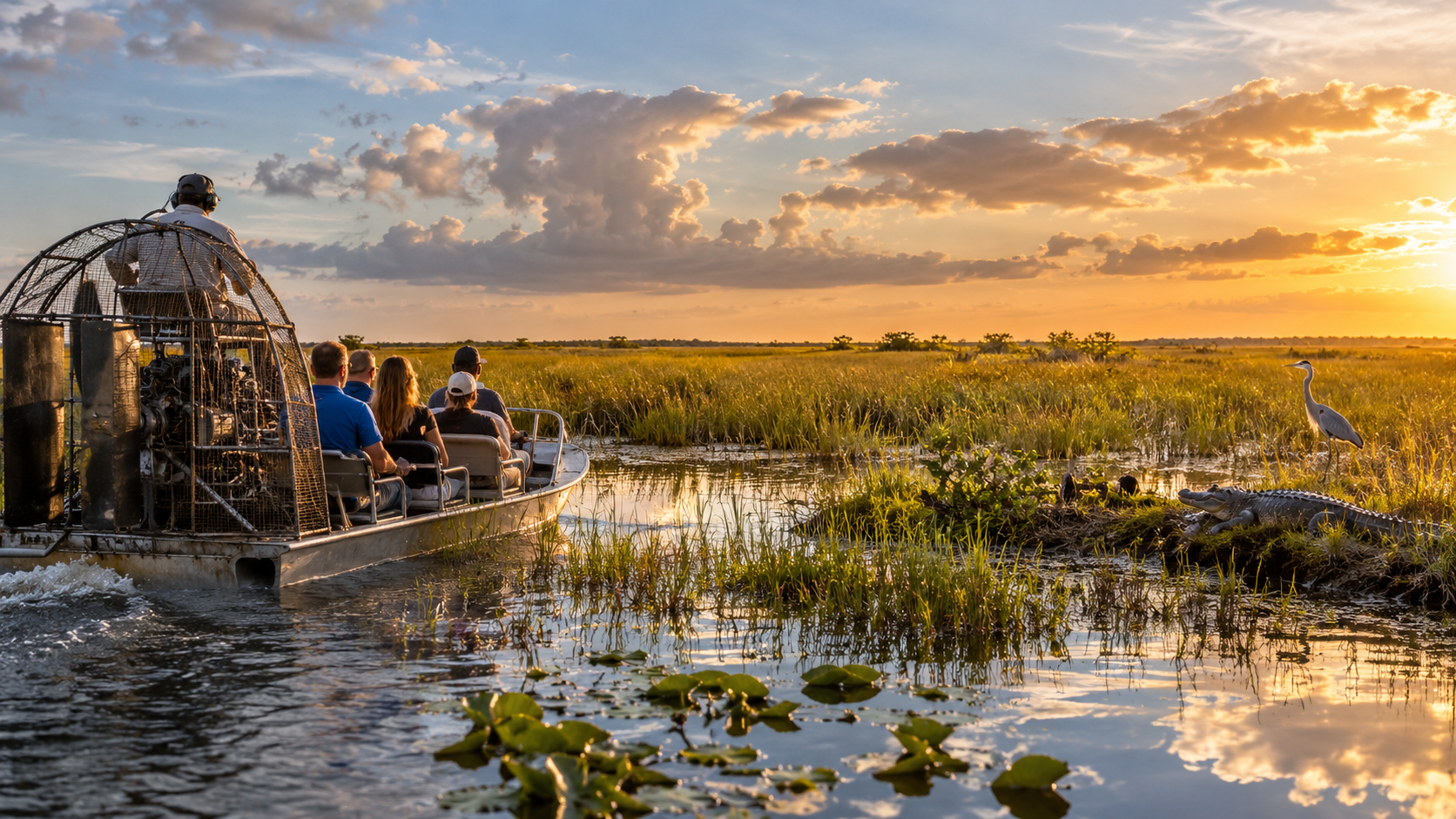
A UNESCO World Heritage Site, the Everglades is a 1.5-million-acre subtropical wilderness, the largest in the United States. It's home to alligators, manatees, the endangered Florida panther, and hundreds of bird species. The park is accessible from Miami in about 45 minutes by car. Activities include airboat tours, offered by various operators near Shark Valley and along the Tamiami Trail, hiking trails, kayaking through mangrove tunnels, and wildlife observation. The Shark Valley entrance is the closest to Miami and features a 15-mile paved loop trail that is walkable, bikeable, or accessible by tram, where alligator sightings are virtually guaranteed.
Biscayne National Park
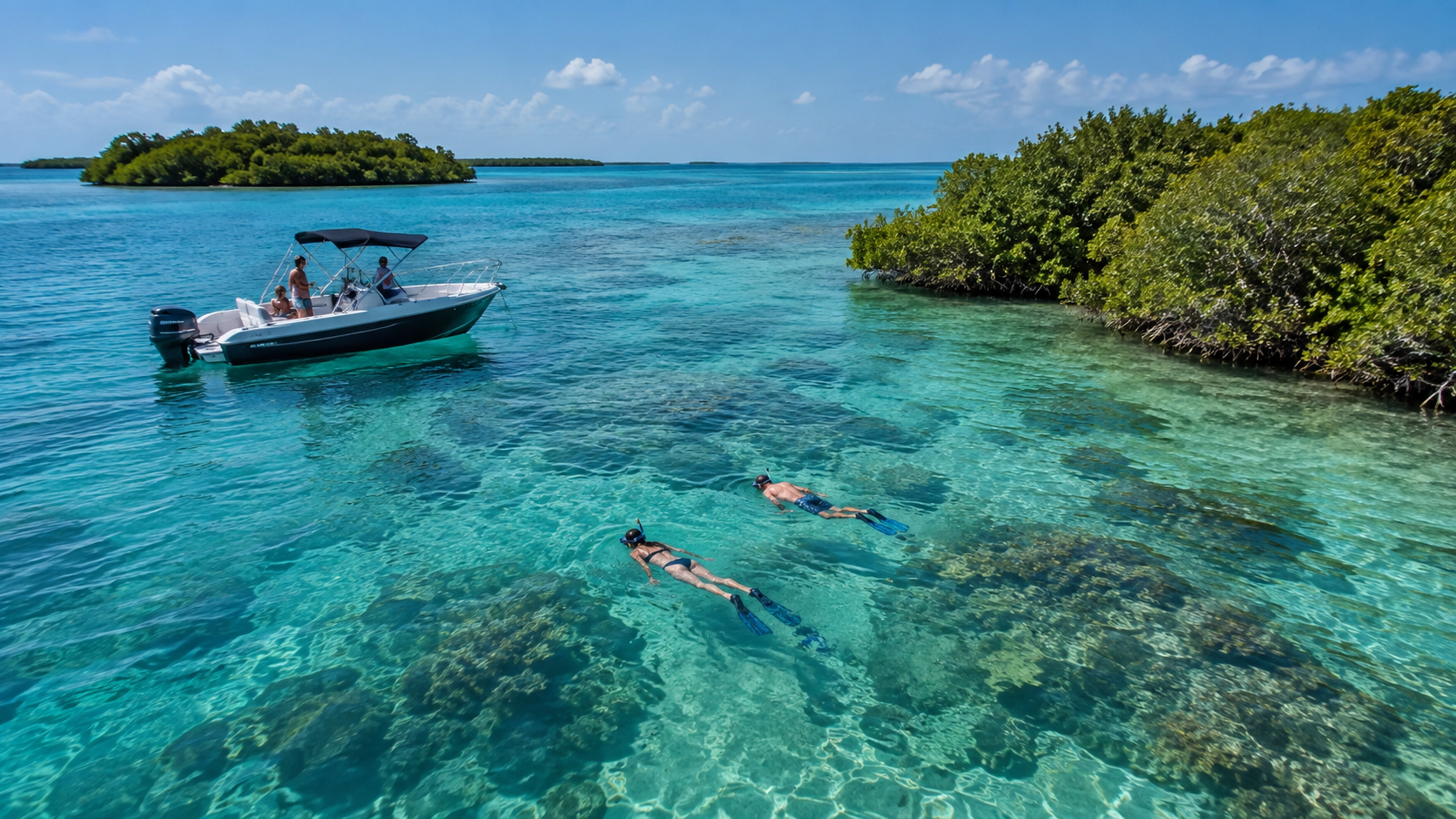
Less famous than the Everglades but equally remarkable. Biscayne National Park protects 173,000 acres of ocean, shoreline, islands, and coral reef. Most of the park is underwater, making it ideal for snorkeling, diving, and glass-bottom boat tours. The park is free to enter. Boat tours and snorkeling trips are offered by concessionaires for a fee. Located about 45 minutes south of downtown Miami.
Oleta River State Park
Florida's largest urban park, located in North Miami Beach. Over 1,000 acres of mangrove forest, a sandy beach on Biscayne Bay, mountain biking trails, kayak and paddleboard rentals, and camping cabins. It's a genuine escape from the city without leaving the city. Admission is $6 per vehicle.
Fairchild Tropical Botanic Garden (Coral Gables)
One of the premier tropical botanical gardens in the world. It has 83 acres of tropical plants, including palms, cycads, flowering trees, and a butterfly conservatory. The garden hosts rotating exhibitions, science programs, and seasonal festivals. Adult admission is approximately $30.
Food and Drink
Miami's food scene is shaped by its immigrant communities. Cuban, Haitian, Colombian, Venezuelan, Peruvian, Argentinian, Brazilian, and Caribbean influences are everywhere. It's one of the best food cities in the United States.
What to Try
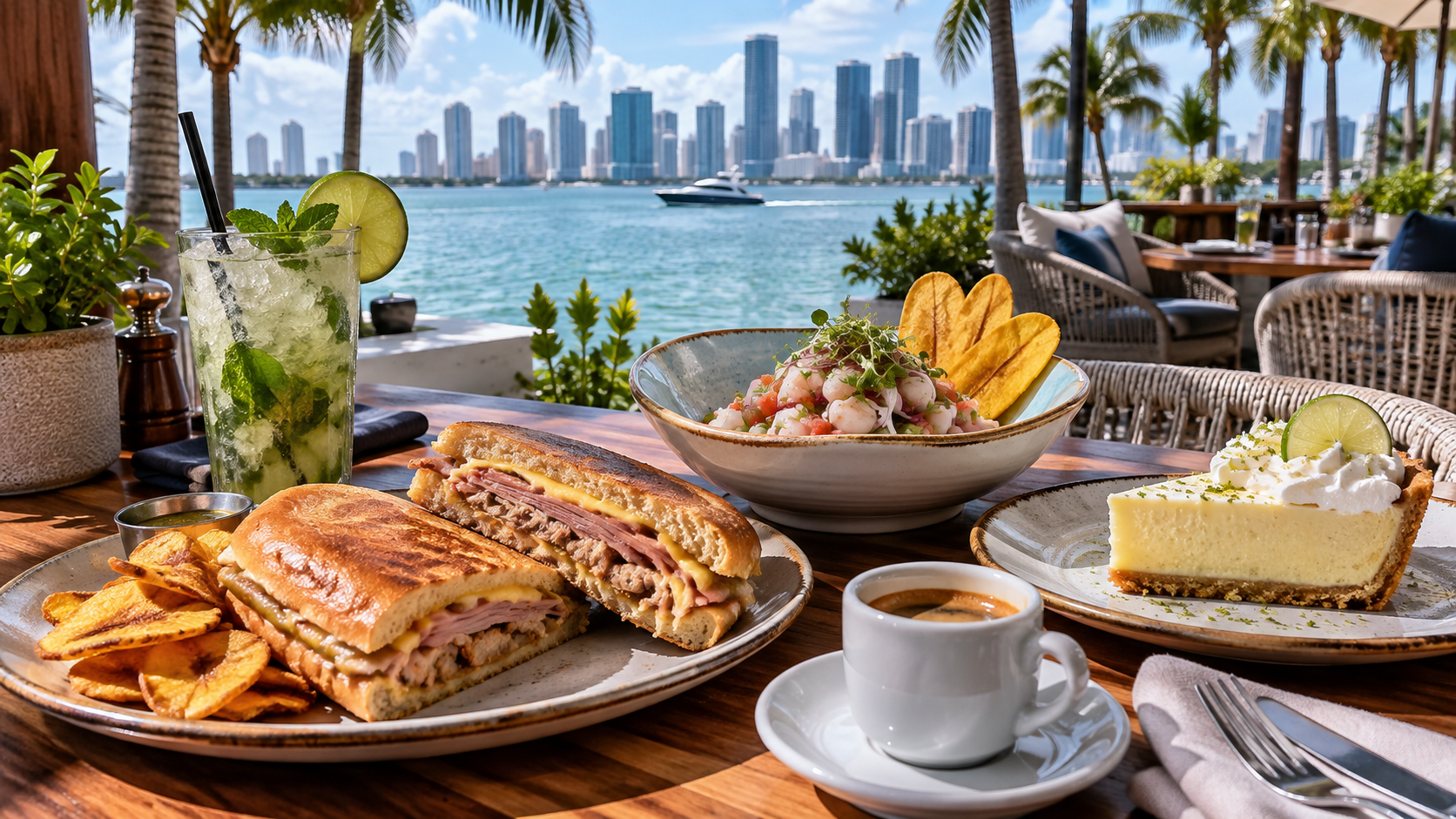
Cuban coffee (cafecito or colada): Available at ventanitas across the city. Strong, sweet, served in tiny cups. A cultural institution.
Cuban sandwich: Pressed with roasted pork, ham, Swiss cheese, pickles, and mustard on Cuban bread. Available everywhere, but Calle Ocho in Little Havana and local bakeries are the most authentic.
Ceviche: Fresh seafood marinated in citrus. Peruvian-style ceviche is particularly popular in Miami.
Arepas: Venezuelan and Colombian corn-based flatbreads stuffed with cheese, meat, or beans. Available in Doral, Weston, and across the city.
Stone crabs: A Miami delicacy served from mid-October through mid-May. The claws are harvested and the crabs are returned to the sea alive. Joe's Stone Crab on South Beach is the most famous spot.
Haitian griot: Fried pork marinated in citrus and spices. Little Haiti and North Miami have the best options.
Key lime pie: Florida's official state pie. Sweet, tart, creamy, with a graham cracker crust.
Where to Explore
Calle Ocho (Little Havana): Cuban, Central American, and South American food. Wynwood: Trendy restaurants, food halls, and breweries. Brickell: Upscale dining and international cuisine. Design District: High-end restaurants and designer cafés. North Miami and Little Haiti: Haitian cuisine and Caribbean flavors. Doral: Venezuelan, Colombian, and Latin American food. South Beach: Seafood, Mediterranean, and nightlife-adjacent dining.
Free and Low-Cost Activities
Not everything in Miami requires a credit card.
Walk the Art Deco Historic District: Over 800 historic buildings from the 1920s to the 1940s along Ocean Drive and Collins Avenue in South Beach. Free, self-guided, beautiful at any time of day, especially at sunset.
Ride the Metromover: A free elevated automated train that loops through downtown Miami and Brickell. It's a public transit system, but the views of the skyline and the bay make it feel like a sightseeing ride.
Visit ICA Miami: Always free. Contemporary art in the Design District.
Explore Wynwood street art: The murals on the streets around Wynwood Walls are free to see. Walk NW 2nd Avenue between 21st and 29th Streets for the densest concentration.
Visit PAMM on the second Saturday: Free admission to one of the best art museums in the Southeast.
Walk the Miami Beach Boardwalk: 4.4 miles of oceanfront path from 21st Street to 46th Street. Free, scenic, and good for jogging, cycling, or just watching the ocean.
Hike Shark Valley (Everglades): The 15-mile loop trail is accessible by foot or bicycle. Park entrance is $30 per vehicle. Bring water and sunscreen.
Attend a free outdoor concert: The Adrienne Arsht Center, Bayfront Park, and various city parks host free performances throughout the year. Check local event calendars.
Browse the Lincoln Road Mall: An open-air pedestrian mall on South Beach with shops, restaurants, and street performers. Free to walk and free to people-watch.
Watch the sunset from South Pointe Park: At the very southern tip of South Beach, this park offers unobstructed views of the sunset, cruise ships departing from the Port of Miami, and Fisher Island across the channel. Free.
Day Trips from Miami
If you have extra time, these destinations are within easy reach.
The Florida Keys (1 to 3 hours south)
A chain of islands connected by the Overseas Highway, one of the most scenic drives in the United States. Key Largo, the first major key, has excellent snorkeling and diving at John Pennekamp Coral Reef State Park. Islamorada is known for sport fishing. Marathon has the Turtle Hospital. Key West, at the very end, approximately 3.5 hours from Miami, has the Hemingway House, Mallory Square sunset celebrations, and a unique island culture that feels unlike anywhere else in the U.S.
Fort Lauderdale (30 minutes north)
Known as the "Venice of America" for its 300-plus miles of inland waterways. Fort Lauderdale Beach is wide, clean, and less crowded than South Beach. Las Olas Boulevard offers walkable shopping, dining, and galleries. The Riverwalk Arts and Entertainment District lines the New River with museums, restaurants, and a park. The Water Taxi is a fun way to see the city from the canals.
Everglades National Park (45 minutes west)
Covered above in the Nature section. Worth a full day trip.
Biscayne National Park (45 minutes south)
Covered above. Book a snorkeling or glass-bottom boat tour in advance.
Practical Tips for Visitors
Weather: Miami is warm year-round. Summer, from June through September, is hot and humid with frequent afternoon thunderstorms. Winter, from December through March, is the most comfortable, with warm, dry weather that is ideal for outdoor activities. Hurricane season runs from June through November.
Getting around: Miami is a car-dependent city. Public transit, including Metrobus, Metrorail, and Metromover, covers downtown, Brickell, and some suburbs, but is limited compared to cities like New York. Rideshare services are widely available. In South Beach and Wynwood, walking and cycling are practical.
Safety: Tourist areas like South Beach, Wynwood, Brickell, Coconut Grove, and Coral Gables are generally safe. As with any major city, use standard precautions. Keep valuables secure, be aware of your surroundings, and avoid poorly lit areas late at night.
Language: Miami is one of the most bilingual cities in the United States. Spanish is widely spoken, especially in Little Havana, Doral, Hialeah, and Kendall. You'll hear English, Spanish, Portuguese, Haitian Creole, and many other languages daily.
Tipping: Tipping is customary in the United States. Standard tips are 15 to 20% at restaurants, $1 to $2 per drink at bars, and $1 to $2 per bag for hotel porters.
References
- TimeOut Miami. "40 Best Things to Do in Miami Right Now." Updated July 2026. https://www.timeout.com/miami/things-to-do/best-things-to-do-in-miami
- TripAdvisor. "THE 15 BEST Things to Do in Miami (2026)." https://www.tripadvisor.com/Attractions-g34438-Activities-Miami_Florida.html
- Viator. "What to Do in Miami? The 15 Best Attractions." Updated 2026. https://www.viator.com/Miami/d662
- Saily. "9 Best Things to Do in Miami, Florida in 2026." https://saily.com/blog/things-to-do-in-miami/
- National Park Service — Everglades National Park. https://www.nps.gov/ever/
- National Park Service — Biscayne National Park. https://www.nps.gov/bisc/
- Pérez Art Museum Miami (PAMM). https://www.pamm.org
- Vizcaya Museum and Gardens. https://vizcaya.org
- Phillip and Patricia Frost Museum of Science. https://www.frostscience.org
- Fairchild Tropical Botanic Garden. https://fairchildgarden.org
This guide was published by Lingua Language Center — ACCET-accredited and SEVP-certified English language school with campuses in Fort Lauderdale, Doral (Miami), and Weston. Teaching English and foreign languages in South Florida since 1998. For more about studying English in Miami, visit lingua.edu.