











Accredited by:
If you are currently in the United States in another nonimmigrant status and want to make full-time English study your primary purpose, Lingua can help you complete the admissions steps, review school documents, and issue a Change of Status Form I-20 if you are eligible for admission. You or your legal representative submit the request to U.S. Citizenship and Immigration Services (USCIS).
Is this the Right F-1 Path for You?
Are physically present in the United States after lawful admission in a nonimmigrant status.
Have maintained the conditions of your current status and are still within the period authorized for your stay when filing.
Want to enroll in Lingua's full-time, in-person Intensive English Program.
Understand that USCIS—not Lingua—determines Change of Status eligibility and approval.
IMPORTANT ELIGIBILITY NOTE Not every status can be changed to F-1, and some categories have restrictions. If your status has expired, you may have violated its terms, or your immigration history is complex, consult qualified immigration counsel before relying on this pathway.
DIFFERENT PATHWAY? If you are outside the United States, use the F-1 Initial Student page. If you are already studying at another U.S. school in valid F-1 status, use the Transfer to Lingua page.
F-1 Status Inside the United States
Without Applying for a Visa Abroad
A Change of Status is a request for USCIS to change your current U.S. nonimmigrant classification to F-1 while you remain in the United States. It is not the same as an F-1 visa stamp.
If USCIS approves the request, you receive F-1 status for your stay in the United States; if you later travel abroad, you may need to apply for an F-1 visa before returning.
DO NOT ASSUME APPROVAL Continue following the rules of your current status while your request is pending. If your current status does not permit study—including B-1/B-2 visitor status—do not begin the Intensive English Program until USCIS approves F-1 status and Lingua confirms your start date.
School-Side Support and an Immersive English Program
From Admissions Review to Your Confirmed Start Date
1
Discuss
your
school plan
2
Apply to the
intensive
English
Program
3
Receive a
Change of
Status
Form I-20
4
Pay the
I-901
SEVIS fee
5
File form
I-539 with
USCIS.
6
Monitor
the case
and program
date
7
Begin after
approval
and school
confirmation
OPTIONAL FASTER SERVICE USCIS may offer premium processing for eligible Form I-539 Change of Status requests for an additional government fee. Availability, fees, and processing rules can change; review the current USCIS instructions before filing.
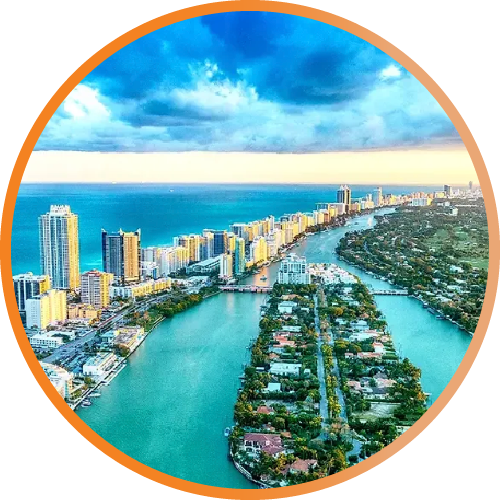
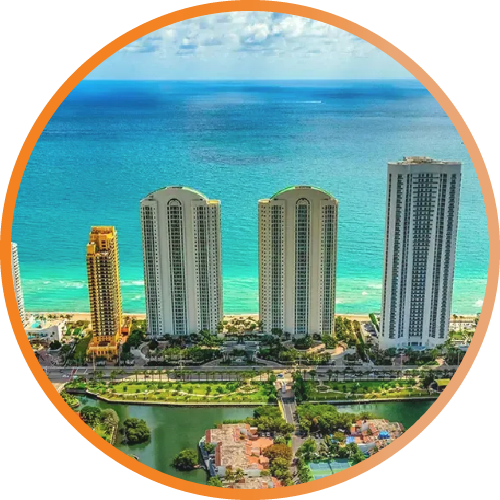
Discover the perfect City
Expand your portfolio with English programs in some of Florida's top destinations
Frequently Asked Questions
What is a Change of Status to F-1?
It is a request for USCIS to change your current nonimmigrant classification to F-1 while you remain in the United States. Approval gives you F-1 status for your U.S. stay; it does not place an F-1 visa in your passport.
Who may be eligible to request F-1 status?
USCIS generally considers whether you were lawfully admitted, your current status was valid when you filed, you followed the conditions of that status, and no other issue makes you ineligible. Some categories cannot change status or have special restrictions. Lingua can assess school admission requirements but cannot provide a legal eligibility determination.
Which Lingua program applies to this pathway?
Only Lingua's full-time, in-person Intensive English Program applies to the F-1 Change of Status pathway described here. The program provides 18 hours of in-person instruction per week.
Is a Change of Status the same as receiving an F-1 visa?
No. USCIS can approve F-1 status inside the United States, but visas are issued by U.S. embassies and consulates. If you later travel outside the country, you may need an F-1 visa to return in F-1 status.
Can I begin classes while Form I-539 is pending?
It depends on the rules of your current status. If your current status does not permit enrollment—such as B-1/B-2 visitor status—do not begin classes until USCIS approves the change to F-1 and Lingua confirms your start date. Enrolling when your status prohibits study can create a status violation.
Does Lingua file Form I-539 for me?
No. Lingua handles admission and the school-side Form I-20 and SEVIS steps. You or your legal representative are responsible for preparing and filing Form I-539 and supporting evidence with USCIS.
How long does USCIS take?
Processing times vary and can change. Check the official USCIS processing-time tool for the filing type and office handling your case. Lingua cannot predict or guarantee a decision date.
Is premium processing available?
USCIS currently lists premium processing for eligible Form I-539 requests to change to F-1 for an additional fee. Review the latest Form I-907 instructions, eligibility, fee, and timing rules before choosing this service.
What if my Form I-20 start date is approaching and the case is still pending?
Contact Lingua before the start date. The DSO may need to defer your program start in SEVIS. Do not let the date pass without coordinating with the school.
Do I need to keep filing applications to bridge the time until my F-1 start date?
Current USCIS guidance says an otherwise eligible F-1 Change of Status applicant generally does not need later filings solely to bridge a gap if the prior status was unexpired when Form I-539 was filed. Individual facts matter, so follow current USCIS instructions and ask qualified counsel about your case.
Can I travel outside the United States while my request is pending?
International travel can affect a pending Change of Status request and your ability to return. Speak with qualified immigration counsel before making travel plans, and notify Lingua if your plans change.
Can my spouse or children change with me?
A spouse and unmarried children under 21 may be able to request F-2 status and will need separate dependent Forms I-20 and the applicable USCIS forms and evidence. Tell Lingua about all dependents early and follow current USCIS instructions.
What if I am not eligible to change status inside the United States?
Consular processing may be an alternative: apply to an SEVP-certified school, receive an initial Form I-20, leave the United States, apply for an F-1 visa if required, and seek admission in F-1 status. Obtain legal advice before choosing a pathway.
Is approval guaranteed?
No. Acceptance to Lingua and issuance of Form I-20 do not guarantee USCIS approval. USCIS reviews each request individually. Lingua provides academic and administrative support and does not make immigration decisions.
Lingua Language Center provides academic and administrative information related to admission, Form I-20, SEVIS, and enrollment. This page is general information and is not legal immigration advice. Change of Status requests are filed with and decided by USCIS. Requirements and procedures may change.